Is Ovarian Cancer More Likely After Menopause - What Are The Symptoms And Signs Of Ovarian Cancer Ctca - Menopause doesn't cause ovarian cancer.
Dapatkan link
Facebook
X
Pinterest
Email
Aplikasi Lainnya
Is Ovarian Cancer More Likely After Menopause - What Are The Symptoms And Signs Of Ovarian Cancer Ctca - Menopause doesn't cause ovarian cancer.. Females who are old enough to bear children are far more likely to experience a cyst than women who have been through menopause. Its outlook is likely to be similar to widespread ovarian cancer. That could be because you've had more ovulations. Many cases of ovarian cancer are found after the cancer has spread to other organs. It results in abnormal cells that have the ability to invade or spread to other parts of the body.
The ability of fsh and lh to modulate. Malignant ovarian lesions include primary lesions arising from normal structures within the ovary and secondary lesions from cancers arising elsewhere in the body. That could be because you've had more ovulations. Before menopause, ovarian cysts are very common; Women who are over 50 are more likely to develop ovarian cancer than younger women.
Managing Ovarian Cancer Pain Everyday Health from images.everydayhealth.com Early symptoms can be regular bloating, abdominal pain or persistent pelvic pain as well. Yes, you can still develop cysts after being in menopause. Some doctors will recommend removing the ovaries (oophorectomy) when any kind of cyst develops on an ovary after menopause. Epithelial cells, germ cells, and stromal. Hereditary ovarian cancer is a distinct possibility with brca 2 or 1 being the most likely choices. Research has shown that women with endometriosis may be more likely to develop ovarian cancer. Bleeding after menopause is usually a sign of a minor health problem but can sometimes be an when detected early, most conditions causing bleeding after menopause (including cancer) can be if you have postmenopausal bleeding it is important to have it investigated. After menopause, ovarian cancer risk increases.
Menopause doesn't cause ovarian cancer.
Hereditary ovarian cancer is a distinct possibility with brca 2 or 1 being the most likely choices. I grew a 10cm cyst and had it removed a few months ago. Supporting women, their families & friends. Females who are old enough to bear children are far more likely to experience a cyst than women who have been through menopause. The ability of fsh and lh to modulate. Many cases of ovarian cancer are found after the cancer has spread to other organs. The ovaries are made up of three different types of cells : Usually they say you're menopausal if you haven't had a period for 12. Get tips on reducing cancer risks. Symptoms for ovarian cancer can be difficult to discern from other conditions. Some doctors will recommend removing the ovaries (oophorectomy) when any kind of cyst develops on an ovary after menopause. Early menstruation or late menopause. Women who are over 50 are more likely to develop ovarian cancer than younger women.
It is much more common after menopause, and women who have never given birth are more likely to develop ovarian cancer than those who have. Females who are old enough to bear children are far more likely to experience a cyst than women who have been through menopause. Speaking of women's health discusses the facts of menopause and the unfortunately, early ovarian cancer is hard to detect. Research has shown that women with endometriosis may be more likely to develop ovarian cancer. Many cases of ovarian cancer are found after the cancer has spread to other organs.
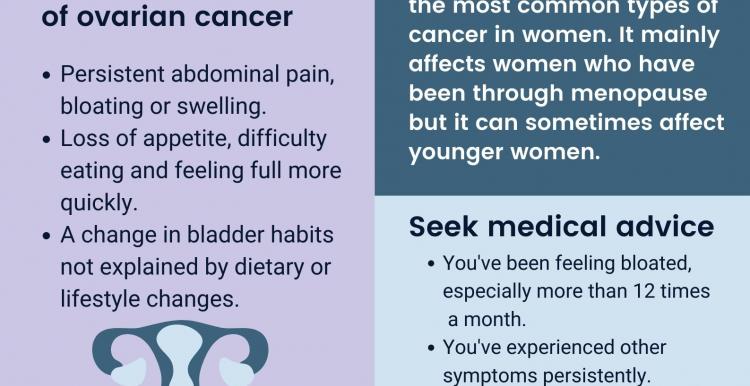
March Is Ovarian Cancer Awareness Month Healthwatch Brightonandhove from www.healthwatchbrightonandhove.co.uk In fact, most women will have them at some point in their lives. Bleeding after menopause is usually a sign of a minor health problem but can sometimes be an when detected early, most conditions causing bleeding after menopause (including cancer) can be if you have postmenopausal bleeding it is important to have it investigated. Ovarian cancer is the 5th deadliest. Epithelial ovarian cancer, which affects the surface layers of the ovary, is the most common type. Two or more close relatives diagnosed with breast cancer prior to age 50, or with ovarian cancer diagnosed at any age. Starting menopause after age 55 increases a woman's risk of breast cancer and endometrial cancer. The most common symptom they had was hot flushes, which could be mild or brief 'tropical moments' but for some were dramatic and debilitating. Many cases of ovarian cancer are found after the cancer has spread to other organs.
The earlier that ovarian cancer is diagnosed, the more likely that treatment will be successful.
It results in abnormal cells that have the ability to invade or spread to other parts of the body. Supporting women, their families & friends. Your ovaries are 2 reproductive organs that store eggs and produce estrogen it's a type of cancer that mostly affects people later in life, usually after menopause. The time when a woman's menstrual periods stop permanently. Endometriosis, a condition that involves tissue from the lining of the. Ovarian cancer is very serious, especially if it's not found early. Find out about the different types and the ovarian cancer is when abnormal cells grow and multiply in one or both of the ovaries. Other factors that can generally increase risk for ovarian cancer include: Starting menopause after age 55 increases a woman's risk of breast cancer and endometrial cancer. Ovarian cancer is a type of cancer that begins in the ovaries. Developing ovarian cancer becomes more of a risk after menopause, even though this transition isn't considered a cause of cancer. Ovarian cancer happens when cells in the ovaries grow and multiply uncontrollably the risk of ovarian cancer increases as you get older, with most cases happening after the menopause. Risk of ovarian cancer is slightly higher also, possibly due to more ovulations. during a woman's menstrual cycle, her uterus and breast tissue are exposed to estrogen.
Females who are old enough to bear children are far more likely to experience a cyst than women who have been through menopause. Epithelial ovarian cancer, which affects the surface layers of the ovary, is the most common type. Many cases of ovarian cancer are found after the cancer has spread to other organs. Two or more close relatives diagnosed with breast cancer prior to age 50, or with ovarian cancer diagnosed at any age. Some doctors will recommend removing the ovaries (oophorectomy) when any kind of cyst develops on an ovary after menopause.
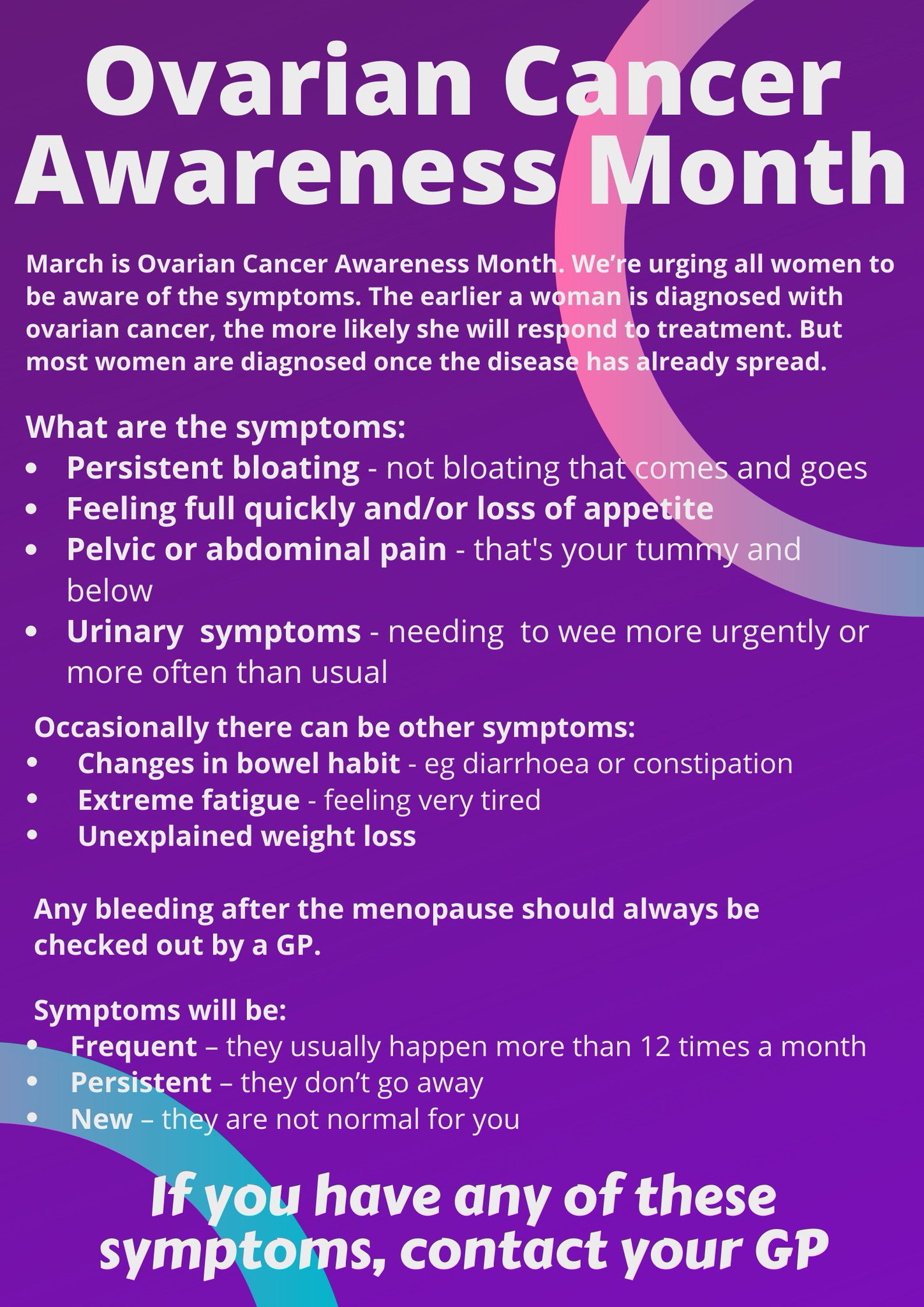
Belfast Trust On Twitter March Is Ovarian Cancer Awareness Month And We Re Urging All Women To Be Aware Of The Symptoms Of The Illness For More Information Go To Https T Co Eqw7vkr9ri Https T Co P26o4bhagi Ovariancancerawarenessmonth from pbs.twimg.com So what is ovarian cancer symptoms? Get tips on reducing cancer risks. Ovarian cancer is the most common cause of cancer death from gynecologic tumors in the united states. This topic focuses on epithelial ovarian cancer. Risk of ovarian cancer is slightly higher also, possibly due to more ovulations. during a woman's menstrual cycle, her uterus and breast tissue are exposed to estrogen. Two or more close relatives diagnosed with breast cancer prior to age 50, or with ovarian cancer diagnosed at any age. You shouldn't have to live in pain till you're 51 and at the average age of menopause. Women who are over 50 are more likely to develop ovarian cancer than younger women.
Menopause is confirmed after 1 year of no periods.
Hereditary ovarian cancer is a distinct possibility with brca 2 or 1 being the most likely choices. It results in abnormal cells that have the ability to invade or spread to other parts of the body. Usually they say you're menopausal if you haven't had a period for 12. Epithelial cells, germ cells, and stromal. You will most likely be. It is much more common after menopause, and women who have never given birth are more likely to develop ovarian cancer than those who have. I grew a 10cm cyst and had it removed a few months ago. Early symptoms can be regular bloating, abdominal pain or persistent pelvic pain as well. Malignant ovarian lesions include primary lesions arising from normal structures within the ovary and secondary lesions from cancers arising elsewhere in the body. That's probably because she's been exposed to more some studies also suggest that using ht after menopause may slightly increase ovarian cancer risk. The time when a woman's menstrual periods stop permanently. Surgery and chemotherapy are generally used to. Yes, you can still develop cysts after being in menopause.
How To Make Invitation Cards For Birthday / Free Birthday Party Invitation Card Online Invitations In Hindi / How to host the best virtual party. . We make it easy for you to keep tabs on. Customize free birthday invitation templates and hype up the excitement for your day. Child birthday party invitations cards wishes greeting card birthday. Finding a decent type of. I want to show you how to use scrapbook paper, photos, stamps and other simple supplies to make sweet and personal birthday party invitations for your little. You can scroll through to see each party invitation available. Don't stress over whether or not your kids passed out the invites to their classmates at school. Our birthday invitation maker lets you celebrate in style by customizing invitation templates with click preview to make sure your invitation looks perfect. How can i make a birthday party invitations online for free. Make a birthday card online ⏩ crello make your friends and family fee...
Signs Of Thyroid Cancer In Males / Hyperthyroidism Overactive Thyroid Symptoms And Causes - Thyroid cancer symptoms in men the thyroid cancer clinic is similar in men and women. . Goiter is one of the thyroid problems in men characterized by a large swelling underneath the adam's apple. Also, if your face is turning red and you have frequent loose bowel movements, these may be signs of something called medullary thyroid cancer. Thyroid cancer typically doesn't cause any signs or symptoms early in the disease. Delayed ejaculation (more common in hypothyroidism) premature ejaculation (more common in hyperthyroidism) problems with sperm. Hypothyroidism (underactive thyroid) is a condition in which your thyroid gland doesn't produce enough of certain crucial hormones. Luckily, it is a treatable disorder for both men and women. A lump (nodule) that can be felt through the skin on your neck changes to your voice, including increasing hoarseness The thyroid im...



Komentar
Posting Komentar